Anti-Money Laundering & Counter-Terrorism Financing
The federal government has introduced amendments to Australia’s Anti-Money Laundering & Counter-Terrorism Financing legislation to better align Australia’s policy with the international standards set by the Financial Action Task Force. These changes will impose new requirements and regulations on existing tranche 1 services, and will bring tranche 2 services – including conveyancing – under the scheme.
Timeline


Frequently Asked Questions
The new legislation and requirements will fully come into effect after the 1st of July 2026.
Services covered by the tranche 2 legislation include work done by:
- Conveyancers
- Lawyers
- Real estate agents & property developers
- Accountants
- Trust and company service providers
Reporting entities must take steps to ensure the identity of their customers.
This includes, but is not limited to, traditional verification of identity.
For full details refer to AUSTRAC’s customer identification guidance.
Australian real estate has been identified as a high risk sector for financial crime, with the purchase of real estate being a key money laundering method.
These changes also serve to modernise Australia’s AML/CTF regulations and rise them to the standards set by the Financial Action Task Force.
Conveyancers will need to enrol with AUSTRAC and maintain an AML/CTF plan for their business.
Once enrolled, conveyancers will need to perform and record customer due diligence, alongside reporting any suspect transactions or activity.
For full details, see AUSTRAC’s summary of the new obligations for Tranche 2 entities.
When the AML obligations take effect, conveyancers will be classified as “reporting entities” under the Anti-Money Laundering and Counter-Terrorism Financing Act 2006. This means we will need to:
- Conduct Customer Due Diligence (CDD), including verifying the identity of the client and (where applicable) any beneficial owners.
- Understand the nature and purpose of the transaction.
- Assess the source of funds and source of wealth, particularly for high-risk clients.
- Monitor ongoing transactions to identify suspicious activity.
The required reporting will include:
- International Funds Transfer Instructions (IFTIs) – where applicable.
- Suspicious Matter Reports (SMRs) – lodged with AUSTRAC where there are reasonable grounds to suspect money laundering or terrorism financing.
- Threshold Transaction Reports (TTRs) – for cash transactions of $10,000 or more (though this is currently less common in conveyancing).
Reporting obligations may arise at any stage of the transaction, but particularly when:
- Funds are being transferred.
- Identity documents seem false or incomplete.
- The client avoids answering standard questions.
- There is a mismatch between the client’s profile and the size/value of the transaction.
Common red flags include:
- A client being evasive about the source of funds.
- Cash purchases with no clear income or explanation.
- Use of third parties or intermediaries with no clear connection.
- Offshore entities or bank accounts in high-risk jurisdictions.
- Reluctance to provide identification or beneficial ownership details.
You are not required to “prove” a lie. Your obligation is to act on reasonable grounds for suspicion. If inconsistencies, evasiveness, or unexplained wealth are present, you should:
- Lodge an SMR with AUSTRAC.
- Document your file notes clearly.
- Avoid continuing with the transaction until further guidance is obtained or risk mitigated.
You are protected under the law when making a report in good faith.
While we may not have access to international financial data, your due diligence can include:
- Asking clients to provide evidence of source of funds (e.g. bank statements, loan approvals, sale contracts).
- Reviewing the jurisdiction risk rating (AUSTRAC, FATF and other bodies publish this).
- Asking the client to complete a source of funds declaration, and noting the reasonableness of their explanation.
- Checking whether the funds come from a reputable financial institution.
If concerns remain, report via an SMR.
Yes – AUSTRAC will provide:
- Sector-specific Guidance Notes.
- Checklists and templates for CDD and risk assessment.
- Access to training tools and e-learning modules via their website.
- Webinars and ongoing compliance updates.
AIC VIC will also develop tailored practice guides, training, and model questionnaires for our industry.
No. Avoiding a trust account does not absolve you of AML/CTF obligations. Even if funds go through PEXA or another third-party payment platform, if you are handling the transaction, you are still a reporting entity responsible for verifying the client and source of funds.
Yes – AUSTRAC and the Financial Action Task Force (FATF) both publish regularly updated lists of:
- High-risk jurisdictions.
- Non-cooperative countries.
- Countries under increased monitoring.
These should form part of your risk-based approach. Clients with connections to or funds originating from such jurisdictions should be subject to enhanced due diligence (EDD).
News & Notifications
Changes to Tipping Off
Resources & Publications
The legislation is the Anti-Money Laundering and Counter-Terrorism Financing Act 2006.
The Anti-Money Laundering and Counter-Terrorism Financing Amendment Bill 2024 implements various changes to the Act, including new requirements for Tranche 2 entities.
A Future Law Compilation of the Anti-Money Laundering and Counter-Terrorism Financing Act has ben prepared, which details the expected wording of the AML/CTF Act for July 2026, once the amendments have come into full effect. This is not active legislation, and further changes may be made prior to the commencement of the above amendments.
AUSTRAC will be publishing guidance notes for professions affected by the new changes.
Guidance for tranche 2 professions is yet to be published.
The Law Council of Australia has published AML/CTF Guidance Notes for the legal profession.
AUSTRAC will be making various resources available as part of the transition to new legislation.
A summary of the new obligations for Tranche 2 entities – including conveyancers- has been made avaliable.
Various general guidance can be found on the AUSTRAC website.
AUSTRAC is regularly releasing updates, which you can subscribe to through their website.
AML/CTF Events & Recordings
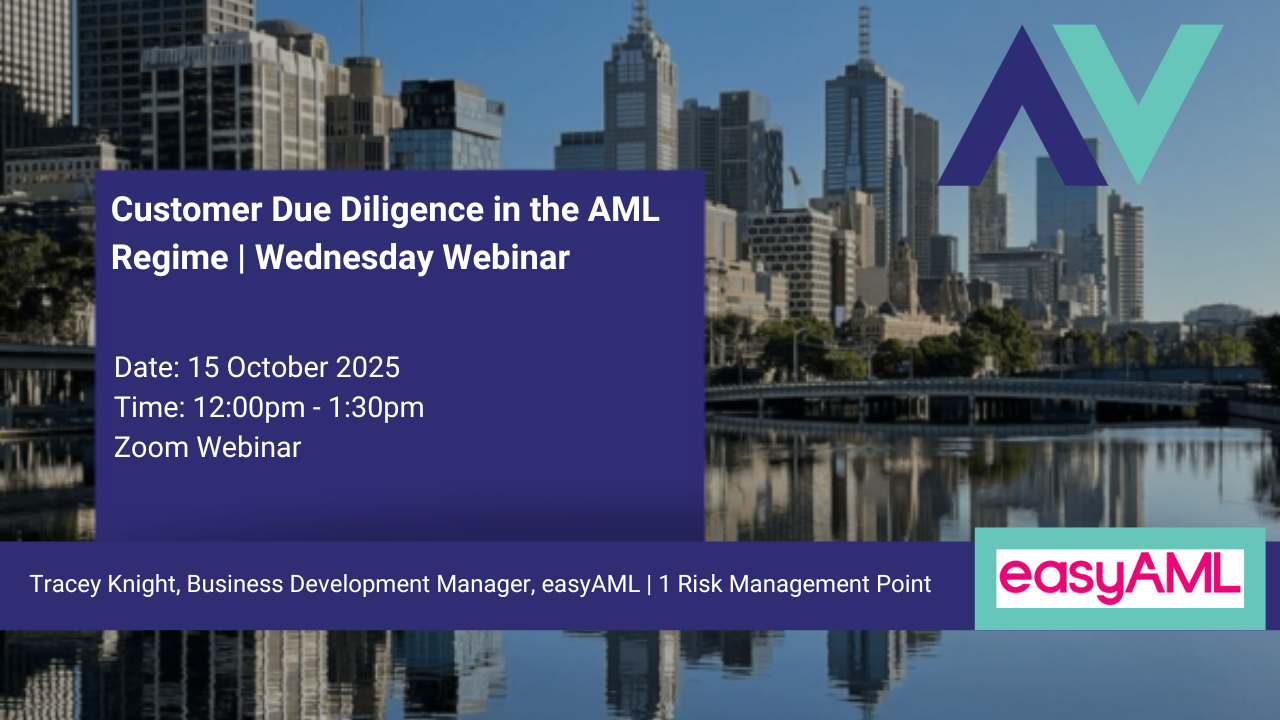
Customer Due Diligence in the AML Regime
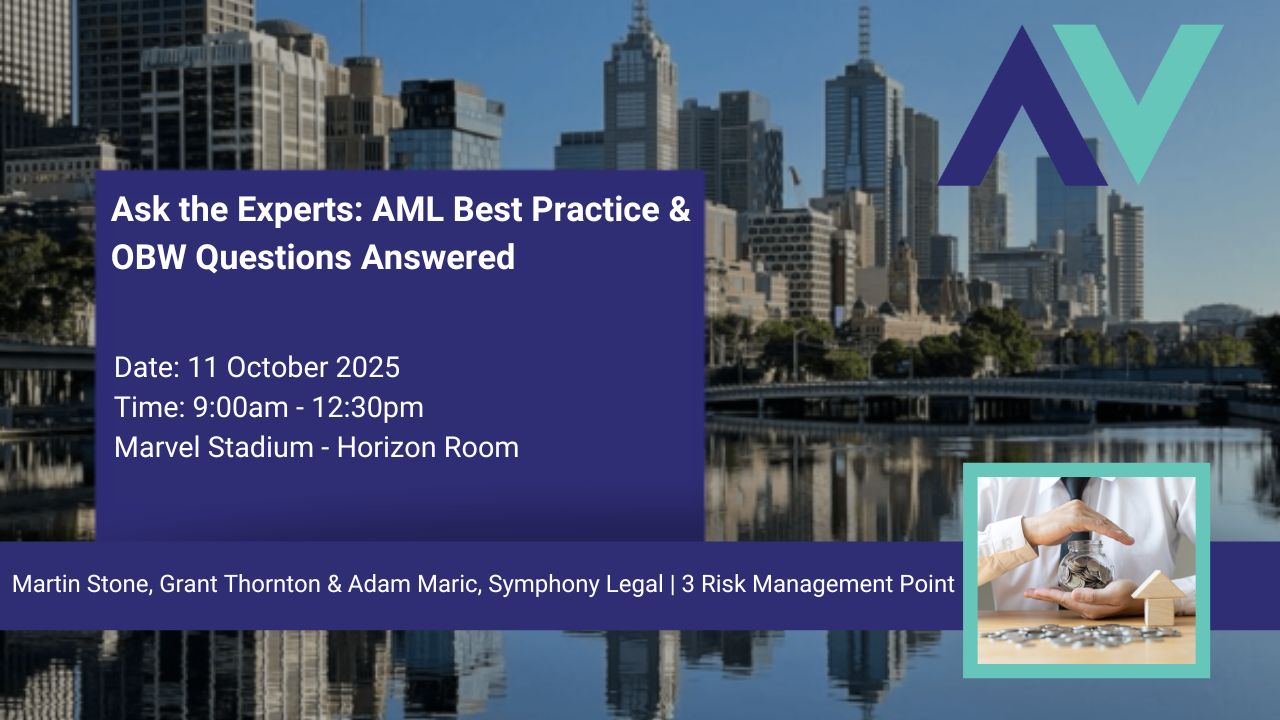
Ask the Experts: AML Best Practice & OBW Questions Answered